Your Reading Corner
Skin Tightening and Facial Lifting: Understanding What Actually Changes as We Age
Most people do not suddenly wake up one morning with “sagging skin”.
Facial ageing is usually much more gradual.
The jawline may look slightly softer. The cheeks may feel less supported. The skin under the chin may appear looser. Fine lines become more visible, and the face may look more tired even when you have slept well.
These changes are often described simply as ageing skin, but the reality is more complex.
The face changes across several layers at the same time. Skin loses collagen and elasticity. Fat compartments can shift or reduce in volume. Muscles continue to influence how the face is supported and moves. Even the underlying bone structure changes slowly over time.
That is why one treatment cannot address every sign of ageing.
Before choosing a facial-lifting or skin-tightening treatment, it helps to first understand what is actually changing.
Why Does the Face Start to Lose Firmness?
Collagen is one of the main structural proteins responsible for skin strength and firmness.
As we age, collagen production gradually declines and existing collagen becomes less organised. Elastin also becomes less efficient at helping the skin return to its original position after movement.
The result is skin that feels less firm and slightly less resilient.
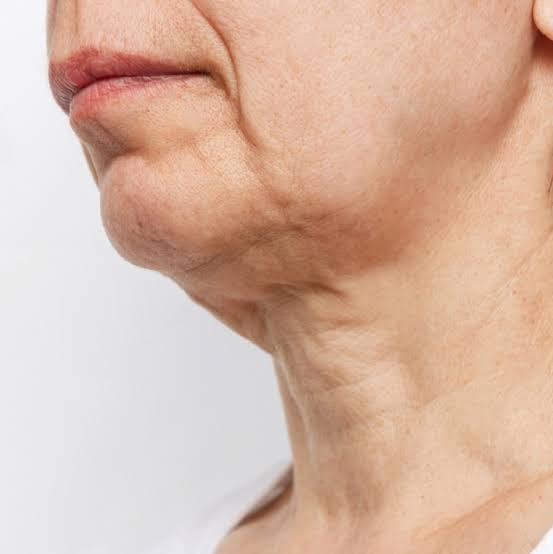
This can first appear around areas where the skin is constantly moving or where tissue support is naturally more delicate, such as the jawline, around the eyes, beneath the chin and along the neck.
But collagen loss is only one part of facial ageing.
A face that appears less lifted may also be influenced by changing fat distribution, muscle tone and deeper structural support.
Why Does the Jawline Become Less Defined?
The jawline is one of the areas where people notice ageing earliest. It may start to look softer, less angular or slightly heavier around the corners of the mouth. This is often described as “jowling”, but jowls do not have one single cause.
Reduced skin elasticity can allow tissue to sit lower. Changes in facial fat can create heaviness in the lower face. Loss of support from the midface may also contribute to the impression that tissue has shifted downward.
This means a softer jawline does not automatically mean that someone needs fat reduction.
In fact, removing volume in the wrong person can sometimes make the face look more hollow or aged. The first question should therefore be whether the concern comes primarily from skin laxity, facial volume, muscle tone or a combination of these factors.

What Causes Sagging Around the Lower Face?
Ageing of the lower face tends to become more noticeable because several changes occur in the same area.
Skin becomes less elastic. Supporting tissues change. Repeated facial movement creates folds. Volume in the cheeks may gradually reduce, while tissue in the lower face can appear more prominent.
These changes may make the corners of the mouth look heavier and the jawline less distinct.
For people with mild early laxity, non-invasive skin-tightening treatments may help support collagen and improve firmness.
At Radium Wellness Centre, TempSure uses monopolar radiofrequency energy to gently heat the skin and support collagen remodelling.
Its role is mainly to improve mild laxity and skin firmness rather than dramatically reposition facial tissue.
Learn more about TempSure Skin Lifting Treatment.
Is It Possible to Tighten Skin Without Surgery?
Yes, although expectations need to be realistic.
Non-invasive treatments can improve mild to moderate loss of firmness, especially in the earlier stages of ageing.
They generally work by stimulating collagen or delivering energy into the skin and supporting tissues.
The results are more gradual and subtle than surgery because the tissues are not physically repositioned.
For many people, this is exactly the appeal.
They may not be looking for a dramatic transformation. They simply want the face to appear a little firmer, fresher and better supported while still looking like themselves.

Why Does the Face Look Tired Even When the Skin Is Not Loose?
“Tired-looking” is one of the most common aesthetic concerns, but it is also one of the hardest to define. Sometimes the problem is skin quality.
Dehydration, uneven tone, rough texture and pigmentation can make the face appear less vibrant. Sometimes the issue is volume. Slight hollowing around the temples, cheeks or under-eyes creates shadows that make the face look fatigued.
In other cases, the face has simply lost some of its earlier muscular tone and support.
These are very different concerns. This is why treating tired-looking skin should not automatically mean doing a lifting treatment. Sometimes improving surface quality alone can make a surprisingly large difference.
When Skin Quality Is the Real Issue
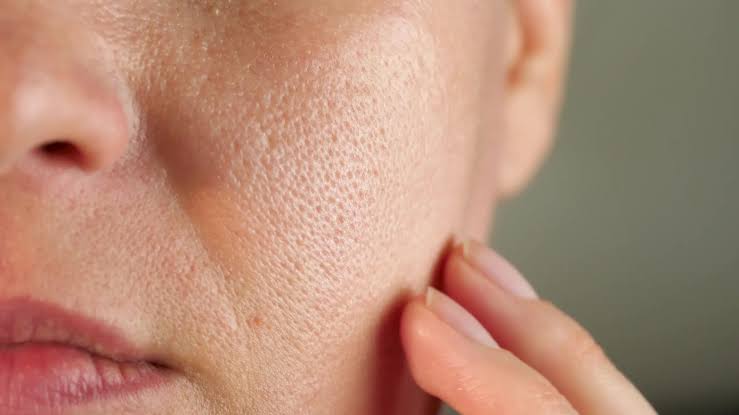
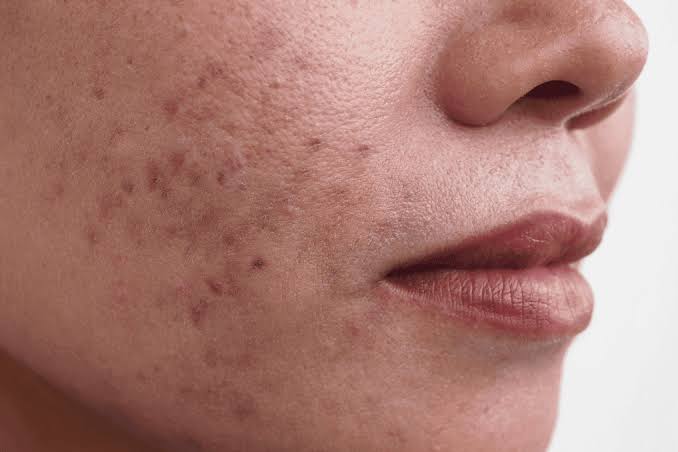
A face can look older even without obvious sagging. Fine lines, roughness, enlarged pores, pigmentation and uneven tone all contribute to an aged appearance.
When the main problem is surface quality, resurfacing or rejuvenating treatments may make more sense than deeper skin tightening.
Tixel is one example. It uses thermo-mechanical energy to create controlled thermal effects in the skin and is used for concerns such as fine lines, texture and overall skin quality. It is not primarily a lifting treatment. Instead, it focuses more on improving how the skin itself looks and feels.
Learn more about Tixel Skin Resurfacing Treatment.
Why Does Skin Become Rougher With Age?
Skin renewal gradually slows as we get older.
Dead skin cells may remain on the surface for longer, while changes in collagen and hydration can make the skin feel rougher or less smooth.
Sun exposure also accumulates over many years, contributing to pigmentation, uneven tone and textural changes.
This can create a complexion that looks older even if there is relatively little laxity.
In these situations, improving skin texture and tone may give a more refreshed appearance than immediately trying to “lift” the face.
What Causes Fine Lines?
Fine lines develop through a combination of collagen loss, repetitive facial movement, sun exposure and changes in hydration.
Areas such as the eyes, forehead and mouth tend to show them earlier because the skin moves constantly.
Early fine lines may respond to treatments that improve hydration, skin renewal and collagen.
More established lines can be more complex because repeated movement and deeper structural changes become involved.
The important point is that not every line is caused by sagging.
Why Does the Skin Around the Eyes Age So Quickly?
The skin around the eyes is thinner than most other areas of the face.
It contains less supporting tissue and is constantly moving whenever we blink, smile or squint.
This makes the area particularly vulnerable to fine lines, crepiness and loss of firmness.
But “aged eyes” can also be caused by hollows, eye bags, pigmentation or brow position.
These problems can look similar at first glance but have completely different causes.
This is why the eye area should be assessed carefully before deciding whether the solution is skin tightening, resurfacing or something else.

Why Does the Neck Often Age Before the Face?
The neck has thinner skin and fewer oil glands than many areas of the face.
It is also subjected to repeated movement throughout the day.
Over time, fine lines, crepey texture and laxity may develop even when the face itself still looks relatively youthful.
Sun exposure can accelerate this process.
This is why facial rejuvenation should not always stop at the jawline.
For some people, maintaining the neck is just as important as maintaining the face.
What Role Does Radiofrequency Play in Skin Tightening?
Radiofrequency treatments use controlled heat to stimulate collagen within the skin. The idea is not to burn or aggressively resurface the surface. Instead, the tissue is heated to encourage a gradual remodelling response.
TempSure is used for people whose main concern is mild skin laxity and reduced firmness. It may be particularly relevant around areas such as the jawline, lower face, eyes and neck. Because the collagen response develops over time, the improvement is usually progressive rather than instant.
What About Facial Muscle Tone?
Facial ageing is not only about skin. The muscles beneath the skin also contribute to facial shape, expression and support. This is one reason newer treatments have begun to look at facial muscle stimulation alongside collagen treatment.
EmFace combines radiofrequency with HIFES muscle stimulation. The radiofrequency component supports skin and collagen, while the HIFES component activates selected facial muscles. This makes it particularly interesting for people whose concerns include softer facial contours or reduced facial tone rather than surface ageing alone.
Learn more about EmFace Facial Muscle Toning Treatment.
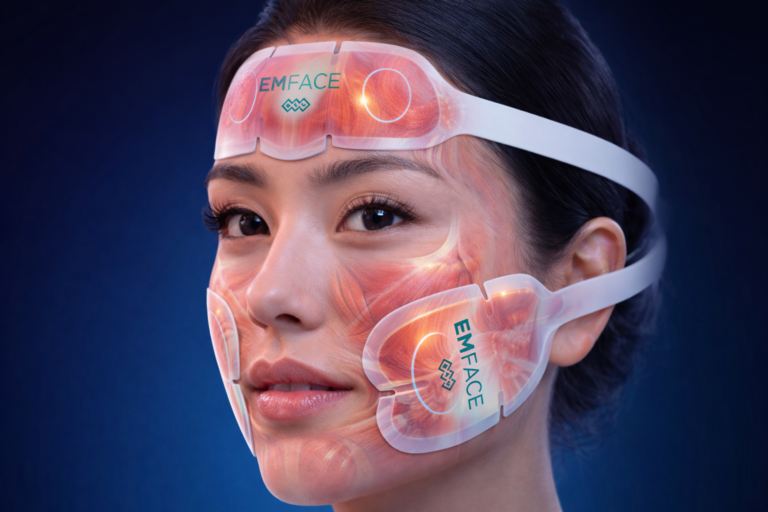
Can Facial Muscles Really Affect How the Face Looks?
Yes. Muscles influence the way soft tissues are positioned and how the face moves. They are not the only factor in facial ageing, but they form part of the support system beneath the skin. Changes in muscle tone can therefore contribute to the overall impression of softness or reduced definition.
This does not mean muscle stimulation is the answer for everyone. It simply gives another option for people whose facial ageing is not solely about the skin.
Can You Prevent Facial Sagging?
Sun protection remains one of the most important measures because ultraviolet exposure contributes significantly to collagen breakdown and pigmentation. Weight stability can also matter. Repeated large changes in weight can stretch the skin and change facial fat distribution. Smoking, poor nutrition and chronic sleep deprivation may also affect how the skin ages.
Skin treatments can support collagen and improve skin quality, but they work best when basic skin health is also being looked after.
Is It Better To Start Anti-Ageing Treatment Earlier?
Not necessarily. There is no correct age to start skin tightening.
Someone in their early thirties may already notice mild laxity because of genetics, facial anatomy or weight changes. Another person may reach their late forties with relatively little sagging.
Age alone therefore does not determine whether treatment is necessary. The better question is whether there is an actual change that you want to address. Treatments should respond to a visible concern rather than simply being performed because of a birthday.
Why Can Too Much Treatment Make the Face Look Older?
This is an important part of the conversation around facial rejuvenation. More treatment does not always create a younger-looking face. Excessive fat reduction can create hollowness. Too much tightening can reduce natural softness. Repeated aggressive resurfacing can irritate the skin.
And constantly trying to correct every small change can result in a face that looks treated rather than refreshed. Good rejuvenation should respect the proportions and character of the face.
The aim is not to erase every sign of ageing.
Does Better Skin Texture Make You Look More Lifted?
Interestingly, yes – at least visually. When the skin is smooth, hydrated and even in tone, light reflects more evenly from the face. This creates a brighter and more refined appearance. Rough texture, pigmentation and redness create shadows and visual irregularity that can make the face look older.
Treatments such as Tixel, Lumixa and BBL HEROic can therefore contribute to a more refreshed appearance even though their main goal is not structural lifting.
For example, Lumixa uses a light-activated photoconverter gel to support radiance, skin balance and general skin quality.
Learn more about Lumixa skin brightening treatment.
For pigmentation, redness and sun-related unevenness, BBL HEROic offers a different approach using BroadBand Light.
Learn more about BBL HEROic skin brightening treatment.
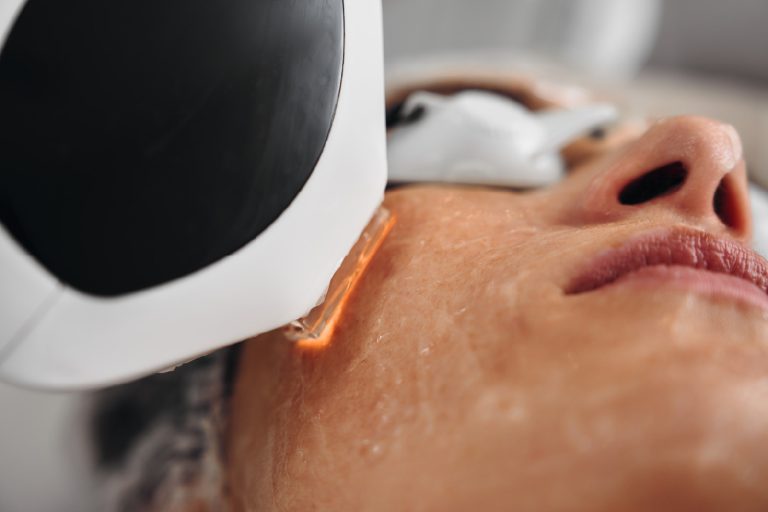
Is There Such a Thing as the “Best” Skin-Tightening Treatment?
Not really. The answer depends on the problem.
Someone with mild early laxity and good facial volume may benefit from a completely different approach from someone whose skin is firm but dull and sun-damaged.
Likewise, a person with thinner skin may need a different treatment strategy from someone with thicker or heavier facial tissues.
Instead of asking which treatment is strongest, it is usually more useful to ask: What change am I trying to improve?
Facial Ageing Is Not One Problem
One of the most useful things to understand about facial ageing is that there is rarely one single cause. The skin changes. The tissues beneath it change. Facial volume changes. Muscles continue to shape and move the face.
This is why simply choosing the newest or strongest treatment does not necessarily produce the best outcome.
Someone whose main concern is rough texture may benefit more from resurfacing. Someone with early laxity may need collagen support. Someone who feels the face has lost tone may benefit from muscle stimulation. And someone with pigmentation or redness may look considerably fresher simply by improving skin quality.
The goal should not be to make the face look different. It should be to understand what has changed, address the parts that matter, and preserve what still looks good.